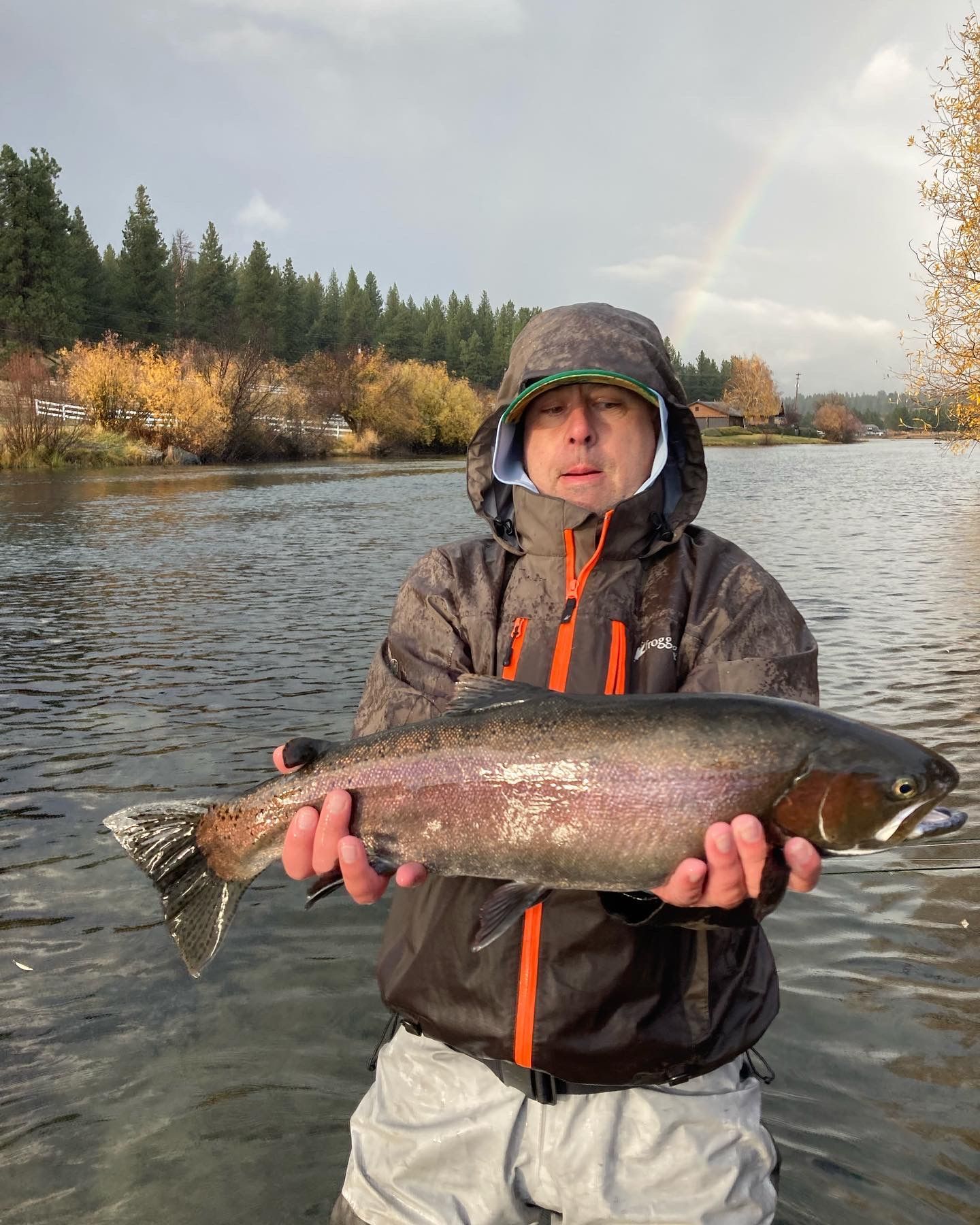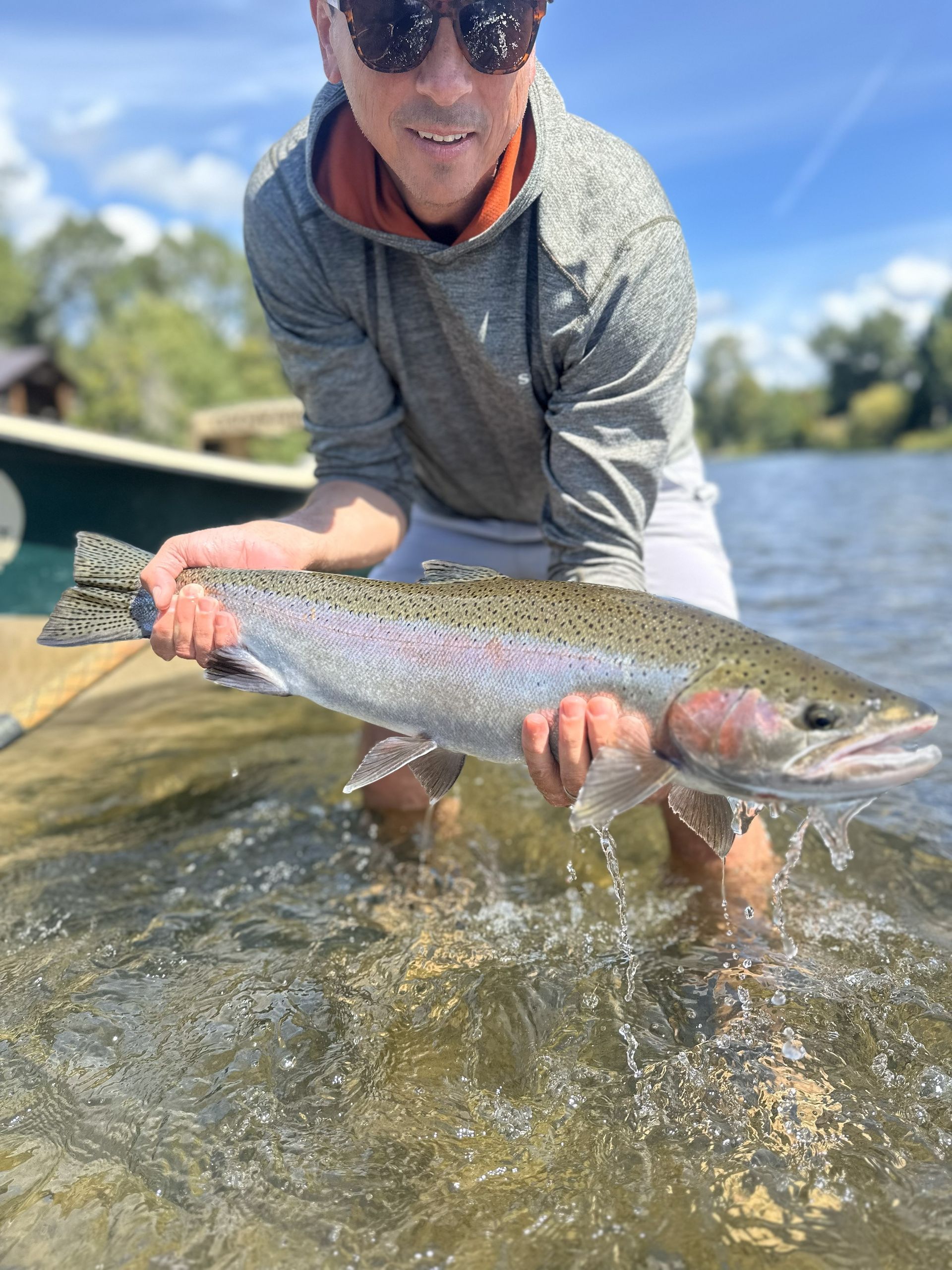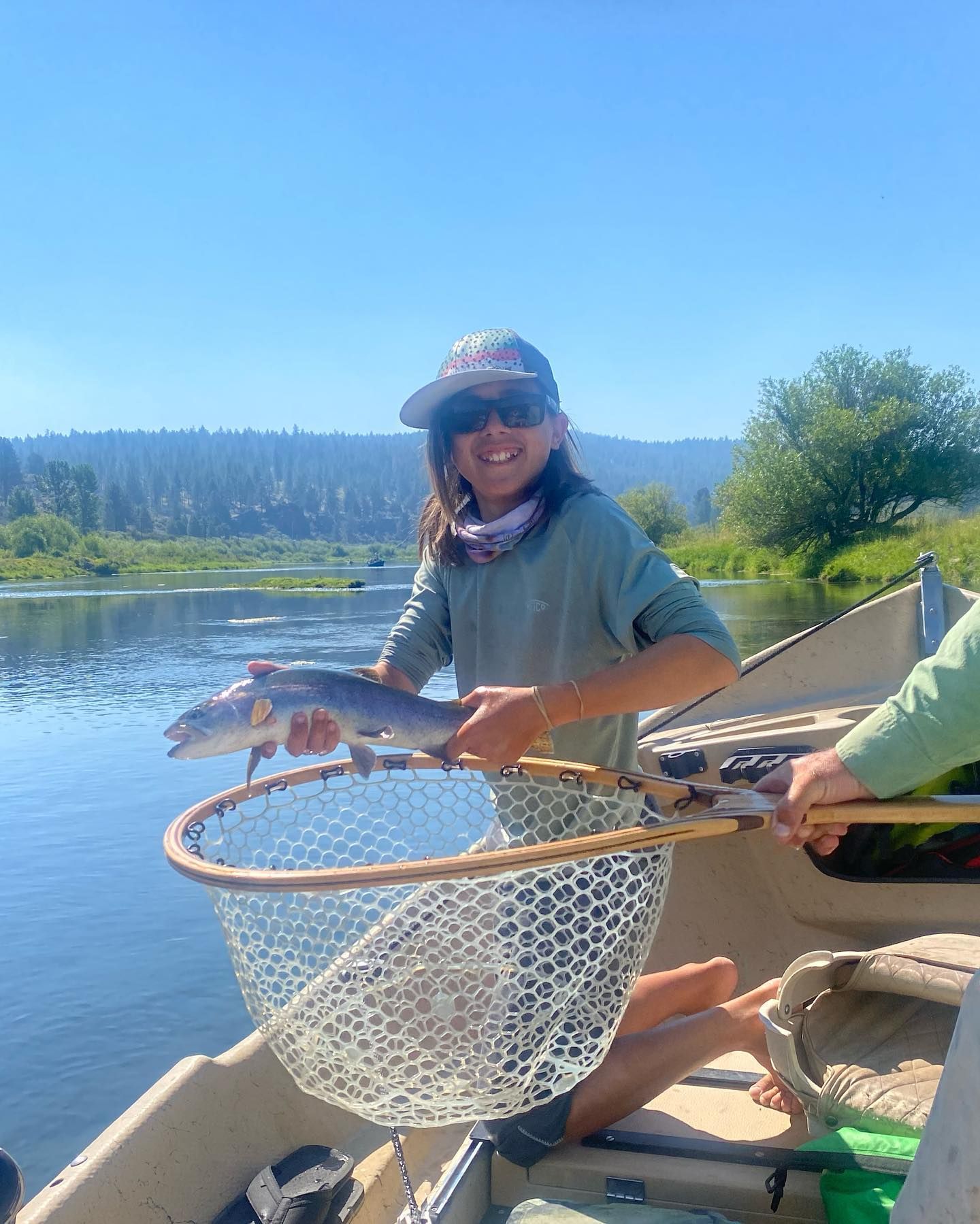
Sight Fishing the Rogue Near Medford Produces Cutthroat Trout Hookups That Feel Earned
Watching a Cutthroat Track Your Fly Teaches You More Than Any Blind Drift Can
When you can see the fish and watch it decide, every element of your presentation becomes legible in a way that blind fishing never allows. Sight fishing for cutthroat trout on the Rogue River near Medford gives you that feedback loop in real time — you observe exactly how the fish responds to your fly, whether it tracks and takes, tracks and refuses, or ignores it entirely. Each response is diagnostic. A track-and-refuse on a dry fly means drag entered the drift; an ignore on a nymph typically means the fly never reached the trout's feeding depth. By the end of a guided trip on this water, Tone Trout Guiding clients finish with a specific vocabulary for reading fish behavior that carries into every future outing.
The Rogue corridor near Medford provides the water clarity that makes this possible — lower-gradient stretches with gravel and cobble substrate where cutthroat hold in predictable feeding lanes during stable flows. Summer and early fall offer the most consistent sight fishing conditions as water drops clear and trout become visible in the shallows and mid-depth runs. Half-day and full-day guided trips are both structured to maximize time on water where fish can be spotted, stalked, and presented to with accuracy rather than blind-coverage casts.
The Technical Demands of Presenting to Visible Cutthroat in Low, Clear Water
Cutthroat trout in the clear, low-flow conditions typical of the Rogue near Medford during late summer have a wide lateral window — they can detect movement, shadow, and sound from several feet in any direction. Approaching within casting range without triggering a spook requires a downstream entry, a low rod angle, and a stop at least 15 to 20 feet beyond the closest visible fish. Most anglers who've fished blind all season step directly into range because they're accustomed to approaching water rather than fish. On sight fishing trips, the guide positions you before you're visible to the trout, which is the single adjustment that changes a day of refusals into a day of opportunities.
Once positioned, fly selection and leader construction become the deciding factors. Cutthroat in technical water near Medford regularly refuse size 14 dry flies in favor of size 18 comparaduns during spinner falls, and 4X tippet creates enough surface disturbance in flat water to register as wrong. Instruction covers how to build leaders for different current speeds, how to identify what the fish is feeding on versus what it's ignoring, and how to place a cast that lands with enough slack to achieve two feet of drag-free drift before micro-currents introduce pull. These are skills that become visible the moment a cutthroat turns toward the fly instead of away from it.
Develop the sight fishing skills that make cutthroat trout catchable in technical conditions — get in touch today to schedule your guided cutthroat trout trip near Medford on the Rogue River.
What a Guided Sight Fishing Trip Delivers That Self-Directed Practice Cannot
Sight fishing for cutthroat trout near Medford accelerates skill development because every cast has an immediate, observable result. A guided trip structures that feedback into actionable instruction rather than confusion. Here's what the guided format provides that solo fishing on this water typically doesn't:
- Pre-approach positioning strategy that keeps you outside the trout's detection zone before the first cast is made — a consistent problem on the Medford stretch where clear water amplifies visibility in all directions
- Real-time fly selection adjustments based on observed feeding behavior, distinguishing between a fish taking emergers just below the surface versus adults on top
- Leader and tippet construction matched to current speed, with specific recommendations for flat-water dry fly presentations versus broken-seam nymph drifts
- Drag diagnosis during the drift — identifying whether the problem is upstream mend timing, anchor point placement, or casting angle relative to current direction
- Full gear setup including rods, reels, and flies matched to cutthroat trout in Rogue River conditions near Medford, with no substitutions for off-target species or water types
Each guided sight fishing session builds a specific, transferable skill set — not general fishing confidence, but the precise mechanical adjustments that produce hookups on visible, selective cutthroat in low-gradient clear water. Get in touch today to book your cutthroat trout sight fishing trip near Medford and leave the water knowing exactly what changed.