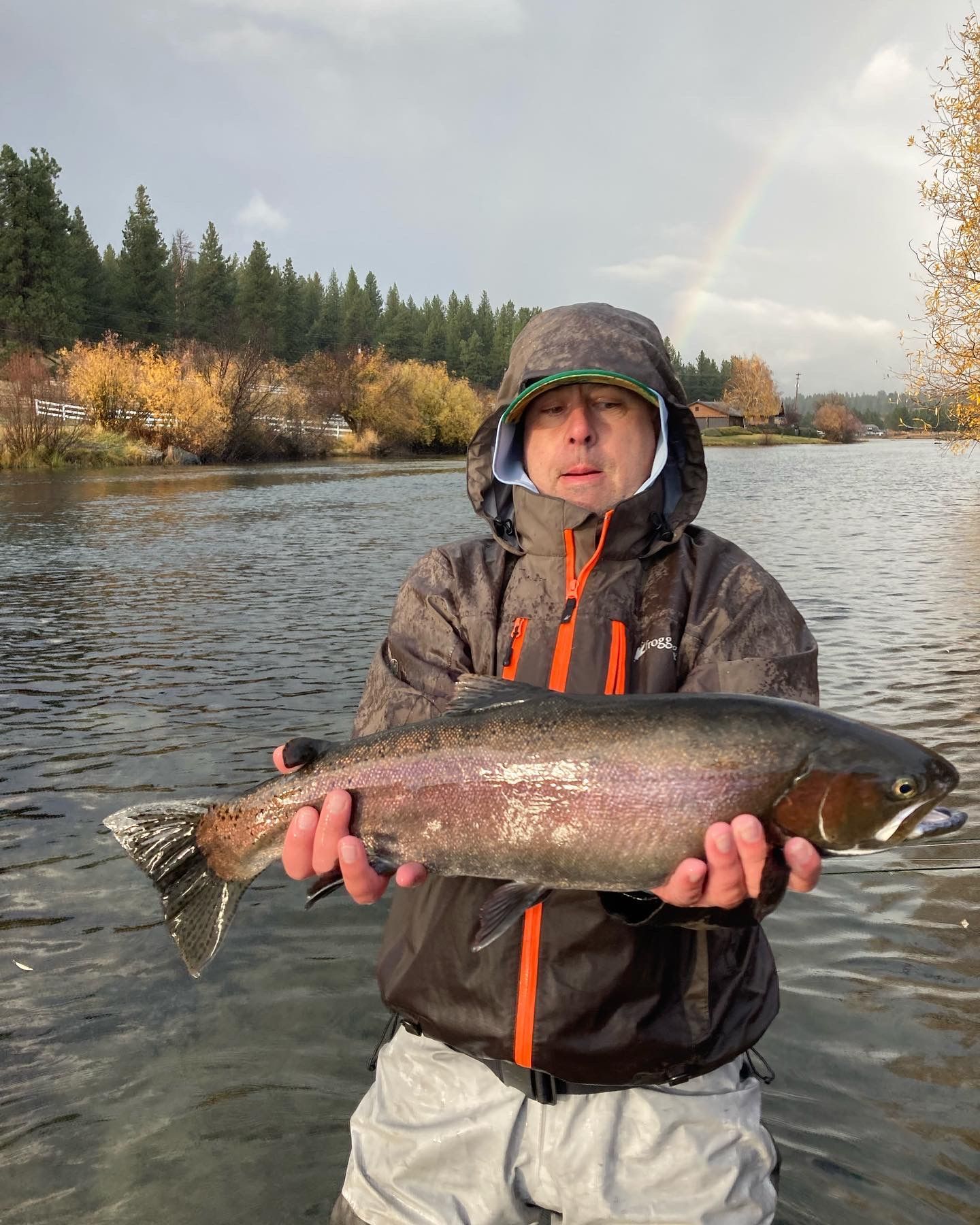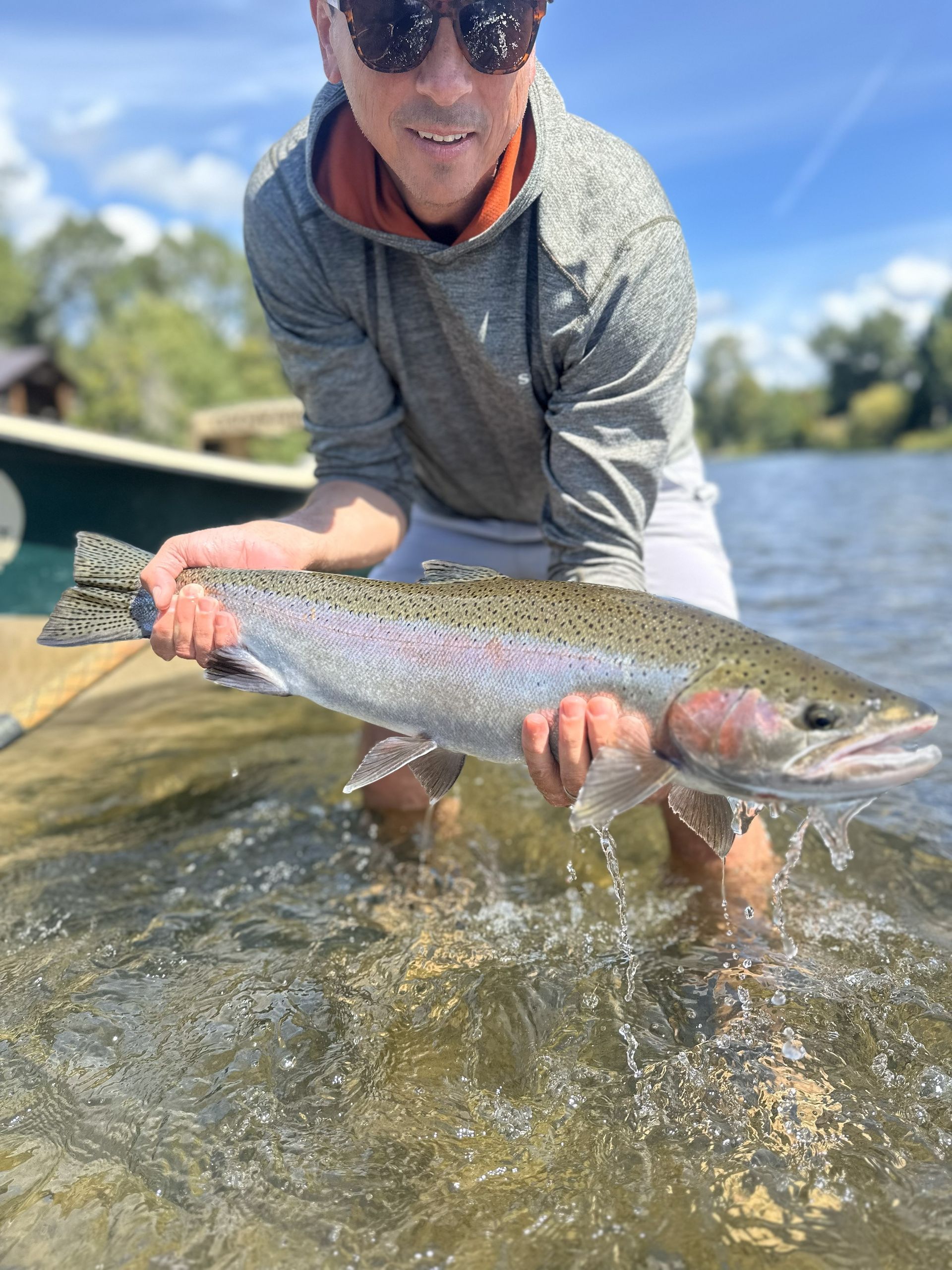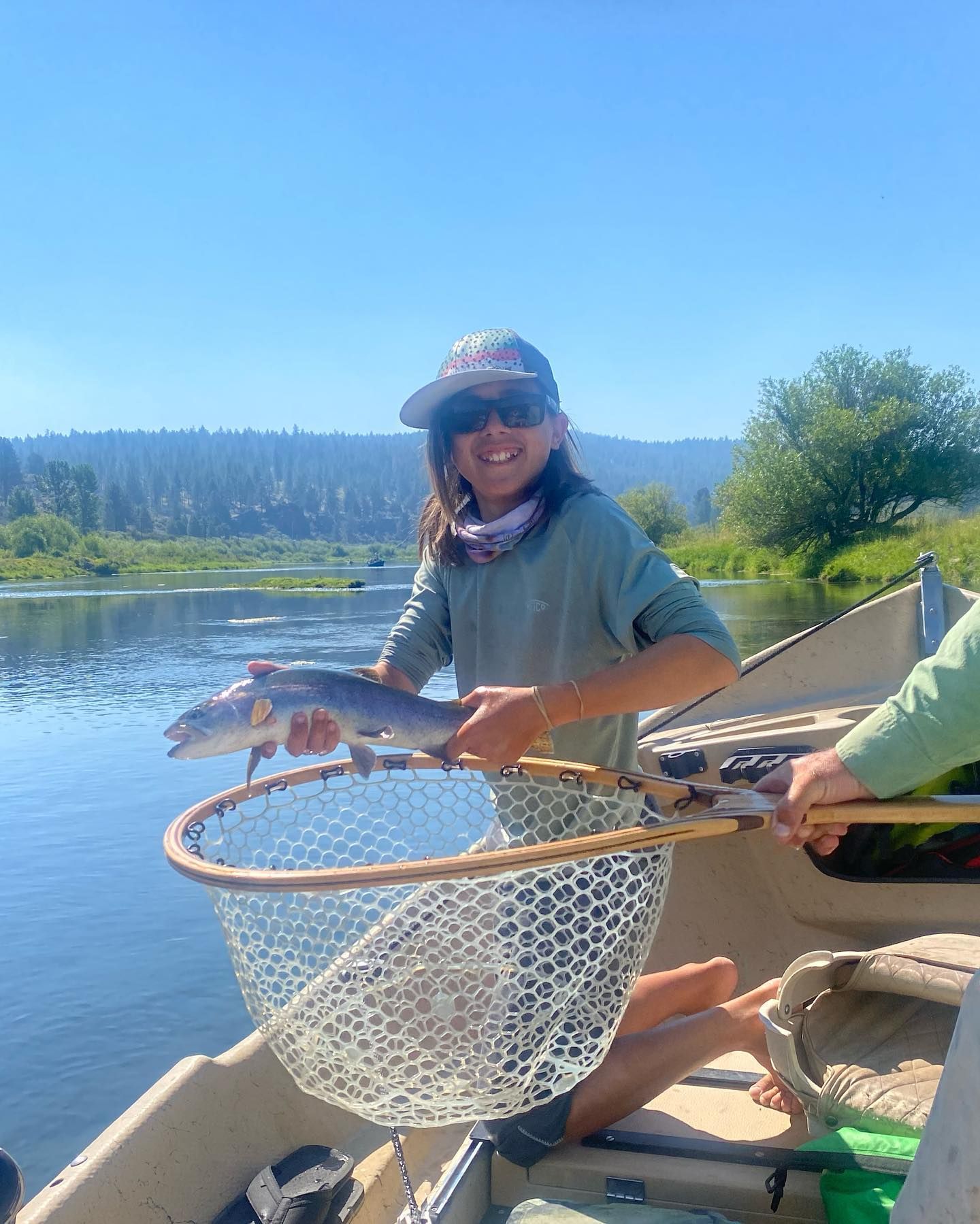
Chiloquin's Upper Rogue Wild Rainbow Trout Reward Anglers Who Adapt to Hatch Cycles
What Changes Between a Productive Drift and a Refusal in This Stretch of River
Along the upper Rogue corridor near Chiloquin, wild rainbow trout are feeding somewhere in the water column at almost any hour — but the depth and method that reaches them shifts with hatch timing, water temperature, and light penetration throughout the day. Anglers who show up with a single approach and fish it across all conditions consistently miss fish that are visibly active. The stretch near Chiloquin is particularly dynamic because it draws cold, spring-influenced flows from the Klamath Basin, keeping trout in feeding mode even during summer months when tailwater fish elsewhere become sluggish and difficult to target.
Tone Trout Guiding structures each wild rainbow trout trip around what the river is doing that specific morning — confirming whether a morning caddis or PMD hatch is active on the surface, whether subsurface nymphing is producing in the deeper pocket water between boulder gardens, or whether streamers are drawing strikes from larger fish staging near woody debris and undercut banks. After a guided trip on this water, anglers consistently report that they can identify feeding transitions — the visual cues that signal when trout shift from nymphing to dry fly feeding — something that takes most solo anglers seasons to learn.
Matching Technique to the Three Water Types You'll Encounter on the Upper Rogue
The upper Rogue near Chiloquin presents riffles, runs, and pools in close sequence, and wild rainbow trout use each differently depending on water temperature and insect activity. In riffles, trout face upstream into broken current and intercept drifting nymphs with minimal movement — a short, tight-line presentation outperforms a long indicator rig here because it maintains contact through the turbulence. In slower runs and pools, trout have time to inspect a fly before committing, which means tippet diameter drops, leader length increases, and approach angles matter significantly more. Fishing both water types poorly looks similar; fishing them differently based on what each demands is what produces a hookup-to-cast ratio worth repeating.
Instruction during guided wild rainbow trout trips covers each transition explicitly — not as theory, but as an in-river adjustment made visible in real time. You'll practice mending to neutralize drag in complex seams, adjust indicator depth incrementally until the fly reaches the feeding zone, and learn how to read a trout's body language as it tracks and either takes or refuses. By the end of a full-day trip on this stretch, the difference between a presentation that drifts naturally and one with subtle drag becomes something you can feel before the fish reacts.
Wild rainbow trout fishing near Chiloquin is at its most productive when you're fishing the right method in the right water — reach out today to book your guided trip and learn the upper Rogue from the inside out.
What Breaks Down When Anglers Fish Upper Rogue Wild Rainbows Without Guidance
Wild rainbow trout in the Chiloquin stretch of the upper Rogue are not difficult to locate — they're difficult to fool consistently. The same clarity that makes this water exceptional for sight fishing also exposes every presentation error. Here's where unguided attempts most often fall apart:
- Indicator rigs set at a fixed depth across all water types, putting the fly above fish in deeper runs and below the feeding zone in shallow riffles near Chiloquin's pocket water sections
- Tippet too heavy for clear-water dry fly presentations — 4X where 6X is needed causes refusals that look like selective feeding but are actually a visibility problem
- Wading directly upstream through a riffle before fishing the tailout at its base, destroying the most productive feeding lane before a single cast is made
- Fly selection based on generalist patterns rather than the specific PMD, caddis, or stonefly size and color active during that week's hatch window on the upper Rogue
- Streamer retrieves that are too fast and too straight, missing the erratic pause-and-dart action that triggers strikes from larger wild rainbows holding near structure
Each of these errors is correctable with one session of guided instruction on actual upper Rogue water. Every trip with Tone Trout Guiding addresses the specific problems showing up in your casting and presentation, not a generic curriculum. Learn more and book your wild rainbow trout trip near Chiloquin — contact us today to check availability and current hatch conditions.